


Tsaaro got CERT-IN Empanelled | MeitY has published the DPDP Rules, 2023.
Tsaaro got CERT-IN Empanelled | MeitY has published the DPDP Rules, 2023.
Tsaaro got CERT-IN Empanelled | MeitY has published the DPDP Rules, 2023.
Tsaaro got CERT-IN Empanelled | MeitY has published the DPDP Rules, 2023.

Back To Home
Research Team (Tsaaro)
Meta introduces a unified account system to streamline security and settings across its apps.

Meta has announced a significant overhaul of its account management system, aiming to simplify how users handle their presence across its platforms. The new “unified account” system builds on the existing Accounts Centre but takes integration a step further by allowing users to manage passwords, email addresses, and two-factor authentication from a single centralised dashboard. This eliminates the need to update settings separately across different apps, offering a more seamless and efficient user experience.
A key highlight of the update is the introduction of passkeys that enable users to log in using biometrics such as fingerprints or facial recognition or via secure device-based verification. This move is expected to enhance both convenience and security, reducing reliance on traditional passwords that are often vulnerable to breaches. Additionally, the system will provide proactive security alerts, including notifications of suspicious login attempts and reminders to enable multi-factor authentication.
Meta is also expanding parental control features through a unified Family Centre portal, allowing parents to monitor their children’s activity across multiple Meta platforms without switching between apps. Despite the push toward integration, the company is maintaining flexibility; users can still choose to keep their accounts separate or link and unlink them as needed. While core account settings will be centralised, app-specific preferences such as privacy controls and tagging options will remain within individual platforms.
This gradual rollout, expected over the coming year, reflects Meta’s broader strategy to create a more connected ecosystem as it expands into new technologies like powered devices and smart wearables.
Source: Meta announces massive ‘unified account’ overhaul to simplify Facebook, Instagram, WhatsApp security
News of the week:
Haryana launches census with assurances on data privacy and security.
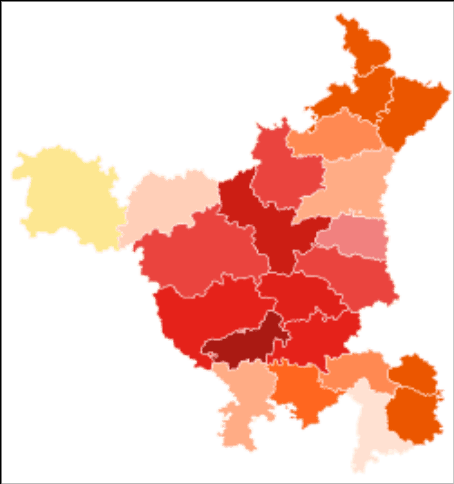
As Haryana begins the rollout of Census 2027, the conversation has increasingly centred on data privacy alongside the exercise itself. Chief Minister Nayab Singh Saini has stated that all information collected will remain confidential and will be used solely for statistical purposes. The government has emphasised that safeguards are in place to prevent unauthorised access, misuse, or sharing of personal data, seeking to address concerns that typically arise with large-scale data collection.
The shift toward a fully digital census has made these concerns more pronounced. With the introduction of online self-enumeration, the process now relies on secure authentication systems and controlled access mechanisms. Officials maintain that the digital infrastructure has been designed to protect sensitive information while ensuring ease of participation. At the same time, traditional door-to-door enumeration will continue, providing an alternative for those who may not be comfortable with or have access to digital platforms.
The emphasis on privacy reflects a broader context in which public awareness of data protection has grown significantly. By foregrounding confidentiality and security, the administration appears to be aiming to build trust and encourage accurate participation.
Source: Haryana CM launches statewide census ops, assures data will be safe.
India evaluates risks posed by advanced AI models.

As India steps up its engagement with advanced artificial intelligence, the government has begun formally assessing the risks posed by emerging AI models, signalling a shift from adoption to regulation. A high-level meeting chaired by Nirmala Sitharaman, along with IT Minister Ashwini Vaishnaw, brought together banks and regulators to evaluate potential vulnerabilities linked to cutting-edge systems.
The focus of these discussions has been on the unpredictable nature of next-generation AI models, which introduce new kinds of cybersecurity and systemic risks. Officials highlighted that these technologies are not just incremental upgrades but represent a significant shift in capability, requiring stronger preparedness, coordination, and oversight across institutions.
Concerns are particularly acute in the financial sector, where AI systems could expose sensitive data, disrupt operations, or be exploited for sophisticated cyberattacks. The government has urged banks to strengthen their cyber defences and develop coordinated response mechanisms to deal with such threats in real time.
This move reflects a broader recognition that AI governance must evolve alongside technological advancement. Rather than reacting after risks materialise, policymakers appear to be adopting a more anticipatory approach: identifying vulnerabilities early and shaping regulatory frameworks accordingly. As AI systems become more powerful and integrated into critical infrastructure, the challenge will lie in balancing innovation with safeguards that ensure security, accountability, and resilience.
Source: Government assesses potential risk from AI models
RSF flags India’s data law over press freedom concerns.

As India implements the Digital Personal Data Protection Act, 2023, concerns are emerging over its potential impact on access to information, particularly from the perspective of press freedom. Reporters Without Borders (RSF) has flagged that while the law aims to strengthen personal data protection, its current framework may inadvertently restrict the flow of information that is in the public interest.
At the core of the concern is the absence of clear exemptions for journalistic or public interest use of personal data. The law broadly limits the disclosure and processing of personal information, which critics argue could undermine longstanding transparency mechanisms such as the Right to Information framework. This marks a significant shift, as earlier provisions allowed certain disclosures when justified by public interest, an element now seen as weakened or removed.
RSF has also highlighted practical challenges for journalists, particularly investigative reporting. Requirements around consent and disclosure of data usage could make it difficult to report on individuals, institutions, or public officials without prior notification, potentially discouraging whistleblowers and limiting accountability journalism.
More broadly, the issue reflects a growing tension between privacy and transparency in India’s regulatory landscape. While the government has positioned the law as a necessary step to protect citizens’ data in a digital age, critics argue that without carefully designed safeguards, it risks tilting too far toward restriction. As legal challenges and policy debates continue, the long-term implications will likely depend on how effectively the law balances individual privacy with the public’s right to access information.
Source: RSF flags India’s data protection law over information access concerns
Want to know more?
Learn more about India's data protection environment, compliance frameworks, and in-depth analyses of privacy policies at Tsaaro.com.