


Tsaaro got CERT-IN Empanelled | MeitY has published the DPDP Rules, 2023.
Tsaaro got CERT-IN Empanelled | MeitY has published the DPDP Rules, 2023.
Tsaaro got CERT-IN Empanelled | MeitY has published the DPDP Rules, 2023.
Tsaaro got CERT-IN Empanelled | MeitY has published the DPDP Rules, 2023.

Back To Home
Research Team (Tsaaro)
MIT Researchers Develop Faster Privacy-Preserving AI Training Method for Edge Devices

Researchers at the Massachusetts Institute of Technology (MIT) have developed a new method that can improve the efficiency of privacy-preserving artificial intelligence. The research focuses on a technique called federated learning, in which a network of connected devices collaborates to train a shared AI model.
In this process, a central server sends the model to individual devices, which train it using their local data and then return model updates to the server. Since the data remains on each device, user privacy is preserved.
The researchers developed a new framework called the Federated Tiny Training Engine (FTTE) to support heterogeneous networks consisting of devices with different capabilities and limitations. To overcome these limitations associated with different devices, FTTE introduces three key innovations.
Reducing Memory Requirements: Instead of sending the entire AI model to every device, FTTE transmits only a smaller subset of model parameters. This significantly reduces the memory requirements for each device. The framework uses a special search procedure to identify the parameters that can maximise the model's accuracy while remaining within a predefined memory limit.
Asynchronous Model Updates: The server updates the model asynchronously. Rather than waiting for responses from every device, it collects incoming updates until it reaches a fixed threshold and then proceeds with the next training round.
Prioritising Timely Updates: The server assigns different weights to updates based on when they are received. Older updates contribute less to the training process because outdated information can reduce accuracy and slow down model development.
Source: https://news.mit.edu/2026/enabling-privacy-preserving-ai-training-everyday-devices-0429
News of the week
Indian Government Patches Major Data Exposure Vulnerabilities After Researcher's Disclosure

An independent security researcher discovered 14 vulnerabilities in Indian government IT systems, including two critical and four high-severity flaws. The vulnerabilities affected major education and civil service portals and exposed sensitive personal information, including names, addresses, dates of birth, and bank account details.
Among the findings were unsecured directories in Delhi government education portals that exposed student and employee records, as well as a scholarship portal that revealed the personal and banking information of 4,399 individuals. The most serious issues were found in the Union Public Service Commission (UPSC) portal, where weak identity and access management controls left administrative interfaces publicly accessible, exposing the system to credential attacks and other security risks.
The Indian government addressed all the reported vulnerabilities within two to three weeks. Experts noted that such incidents are often caused by simple configuration errors, weak access controls, and inconsistent security practices rather than sophisticated attacks.
Data Breach at Tata Electronics Exposes Apple's Unreleased iPhone 18 Pro Information
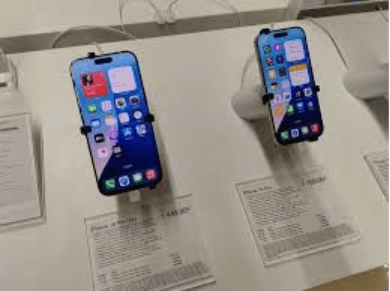
A cyberattack on Tata Electronics, one of Apple's key manufacturing partners in India, has reportedly resulted in the leak of sensitive information related to the unreleased iPhone 18 Pro. According to Reuters, ransomware group World Leaks published supplier lists, component maps, and photographs of the upcoming device on the dark web. The leaked documents allegedly reveal details about suppliers responsible for key components, including the battery, cameras, and main circuit board, potentially exposing vulnerabilities in Apple's supply chain.
The leaked material is part of a larger cache of more than 200,000 files stolen from Tata Electronics, which also reportedly includes documents related to older iPhone models, Tesla components, and records involving major suppliers such as Taiwan Semiconductor Manufacturing Co. and Qualcomm. Apple is reportedly investigating the breach and working with Tata Electronics to strengthen cybersecurity, while Tata has restricted access to sensitive internal systems and initiated a forensic audit by a global consultant.
Over 3 Million Hunting and Fishing License Holders Impacted by Texas Data Breach

The Texas Parks and Wildlife Department has disclosed a data breach involving its external license system vendor that exposed the personal information of 3,087,721 hunting and fishing license customers. The compromised data may include driver's license information, passport numbers, email addresses, phone numbers, and residential addresses. However, the state authority stated that Social Security numbers, dates of birth, and financial information, such as credit card details, were not affected.
The Texas Cyber Command discovered the intrusion and initiated an investigation into the incident. TPWD is working with its vendor to implement additional safeguards and enhanced monitoring services. The TPDW has advised affected individuals to monitor their credit reports and financial statements, consider placing fraud alerts or credit freezes with major credit bureaus, and remain cautious of phishing and impersonation attempts that may exploit the exposed information.
Want to stay ahead?
Secure your communications today with a tailored privacy and compliance strategy from Tsaaro.com.