

Tsaaro got CERT-IN Empanelled | MeitY has published the DPDP Rules, 2023.
Tsaaro got CERT-IN Empanelled | MeitY has published the DPDP Rules, 2023.
Tsaaro got CERT-IN Empanelled | MeitY has published the DPDP Rules, 2023.
Tsaaro got CERT-IN Empanelled | MeitY has published the DPDP Rules, 2023.

Back To Home
Research Team (Tsaaro)
Public Consultation on Artificial Intelligence and Singapore’s Intellectual Property Regime

Singapore’s Ministry of Law (MinLaw) and Intellectual Property Office of Singapore (IPOS) have launched a public consultation on the impact of artificial intelligence on Singapore’s intellectual property regime. The consultation, running from 26 August to 22 October 2026, seeks views on how existing IP laws and frameworks can remain fit for purpose as AI changes the way people create, invent, research and conduct business.
The consultation focuses on three key areas for copyright. These include greater certainty around the use of copyrighted material for AI training, management of copyright risks when AI is deployed, and the role of human creativity in AI-assisted works. The authorities are also seeking views on how responsibility should be assessed when AI-generated outputs infringe copyright and what technical measures could help reduce such risks.
The consultation also examines the implications of AI for patent law. It considers how existing inventorship principles should apply where humans and AI interact during the inventive process, including situations involving problem formulation, selection of AI-generated solutions, and human modification of those solutions. It also looks at how the growing publication of AI-generated technical material could affect prior art, patent searches, examination, and patentability assessments.
The consultation reflects Singapore’s effort to balance innovation with the protection of rights and incentives that support human creativity and investment. Feedback can be submitted to MinLaw until 22 October 2026, 5 PM, through FormSG or email. The consultation could help shape how Singapore’s IP framework responds to increasingly AI-assisted creative and inventive processes.
News of the Week
Albanese to settle AI data centre energy rules, overriding defiant Queensland
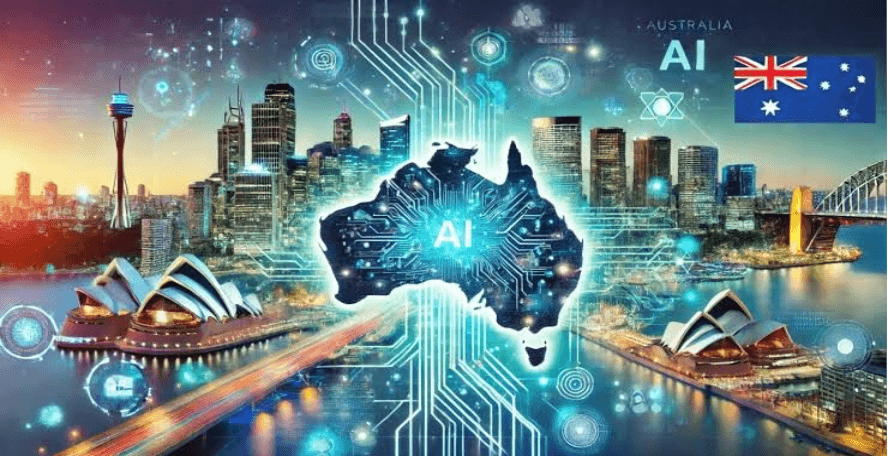
Australia’s federal government is preparing to establish new national standards governing the energy and water use of large artificial intelligence data centres, despite opposition from Queensland. Prime Minister Anthony Albanese’s government is seeking to ensure that the growing demand from AI infrastructure does not place additional pressure on household electricity prices, energy reliability or water resources. The rules were expected to be considered by the National Cabinet on August 26, with the federal government prepared to legislate if states do not agree.
A key point of disagreement is the proposed requirement for data centres to support new renewable energy generation. The federal government argues that large facilities should effectively provide their own additional energy supply so that their growing electricity demand does not increase costs for households and other businesses. Queensland and the Northern Territory, however, have opposed restricting data centres to renewable sources and favour an energy-agnostic approach that would allow coal and gas to remain part of the energy mix.
Queensland Premier David Crisafulli has also argued that communities and local councils should have a greater role in decisions over major data centre projects. The state has proposed its own framework involving social impact assessments and community benefit agreements. The debate comes as Australia anticipates an expansion in data centre infrastructure, with the government estimating that announced investment plans could exceed $100 billion and that data centre energy demand could triple over the next four years.
The disagreement highlights a wider policy challenge surrounding AI infrastructure: governments must accommodate investment in computing capacity while managing its substantial energy and water requirements. Although Queensland ultimately secured flexibility over the use of coal and gas at the August 26 National Cabinet meeting, the federal government said national standards covering energy, water and community consultation would still be legislated.
Source: Albanese to settle AI data centre energy rules, overriding defiant Queensland | ABC News
Nvidia forecasts 70% sales growth next year, signals AI spending boom has years left to run
Nvidia has forecast a 70% increase in revenue for its next fiscal year, signalling that demand for AI computing infrastructure remains strong despite concerns over how long the current AI investment boom can continue. The projection is significantly above Wall Street expectations of around 44% growth and reflects continued spending by major technology companies and other AI developers.
Nvidia reported second-quarter revenue of $96.22 billion, while data centre revenue more than doubled to $89 billion. The company also expects third-quarter revenue of about $108 billion. Demand is expanding beyond large cloud providers to AI laboratories, enterprises, sovereign buyers and industrial customers, indicating a broader market for AI computing.
However, Nvidia continues to face supply constraints, particularly shortages of memory components, which could limit how quickly it can meet demand and put pressure on margins. The company also remains cautious about its business in China because of U.S. export restrictions. Despite these challenges, Nvidia’s forecast suggests that investment in AI infrastructure is likely to remain a major driver of the technology sector for several years.
Anthropic to embed watermark Claude AI under EU Act rules
Anthropic has begun embedding invisible, machine-readable watermarks into text generated by its Claude AI models as part of its efforts to comply with the European Union’s AI Act transparency requirements. The markings are designed to help identify AI-generated content without changing its meaning, quality or readability. Anthropic is applying the system globally, rather than limiting it to users in the European Union.
The move follows the application of the EU AI Act’s transparency rules on August 2, 2026. Under the framework, providers of generative AI systems are required to ensure that certain synthetic content can be identified in a machine-readable format. Anthropic has also committed to marking supported generated files with digitally signed provenance metadata.
The development reflects a broader shift towards technical mechanisms for establishing the provenance of AI-generated content. However, Anthropic notes that a detected watermark is only a signal that content was processed by Claude and should not be treated as conclusive proof of AI authorship, particularly where content has been heavily edited or paraphrased.
Source: Anthropic to watermark Claude AI under EU Act rules | Yeni Şafak
Want to Stay Ahead?
Secure your communications today with a tailored privacy and compliance strategy from Tsaaro.com.