


Tsaaro got CERT-IN Empanelled | MeitY has published the DPDP Rules, 2023.
Tsaaro got CERT-IN Empanelled | MeitY has published the DPDP Rules, 2023.
Tsaaro got CERT-IN Empanelled | MeitY has published the DPDP Rules, 2023.
Tsaaro got CERT-IN Empanelled | MeitY has published the DPDP Rules, 2023.

Back To Home
Research Team (Tsaaro)
Ukraine Focuses on AI Models Under Local Control

Ukraine has announced that it will give preference to AI models that can be operated on its own servers instead of relying on systems controlled by external providers. The move is aimed at ensuring that essential digital services remain available even if access to third-party AI platforms is restricted or withdrawn.
According to Ukraine's Ministry of Digital Transformation, this approach is particularly important for government services, businesses, and defense operations. The country currently uses some cloud-based AI models for public services, but officials said these require additional safeguards because they remain under the control of the service provider.
According to Roman Kyslyi, Chief AI Officer at Ukraine's Ministry of Digital Transformation, the country's focus is on maintaining operational continuity for government services, businesses, and defense operations. He said the key factor is not where an AI model is developed, but whether it can be deployed and managed on Ukraine's own infrastructure. This means Ukraine is willing to work with any provider whose technology can be hosted locally.
At present, the AI assistant in Ukraine's Diia government app uses Google's Gemini model through servers located in the European Union. Since the government does not have full control over the model, personal data is removed before queries are processed. Officials described this as a temporary arrangement while the country develops a more independent solution.
As part of this effort, Ukraine is working with telecom company Kyivstar to develop its own AI model based on Google's open-source Gemma model. The model is expected to be released later this year and is intended for use across government services, private businesses and the military. Officials also stated that open-source AI models have shown performance comparable to some commercially hosted models, making them a practical option for future deployment.
Source: Ukraine to pick AI models operated without provider control, official says | Reuters
News of the week
GoDaddy Warns Against New Measures on Fake Websites by Delhi HC

GoDaddy, the world's largest domain name registrar, has challenged a Delhi High Court order aimed at tackling fake websites that impersonate well-known brands. Under the court's directions, domain registrars would be required to stop providing privacy protection by default, disclose the identity of domain owners within 72 hours to parties with a "legitimate interest," and prevent the registration of domain names that are similar to existing trademarks. The order also led to the blocking of more than 1,100 websites allegedly involved in impersonation and fraud.
GoDaddy has argued that these measures could expose the personal information of legitimate website owners and increase security risks such as phishing and harassment. The company has also stated that broad restrictions on domain names could affect businesses that are not involved in any wrongdoing. Several other domain registrars, including Namecheap and Hosting Concepts, have also challenged the order. The Delhi High Court is expected to hear the appeals later this month. GoDaddy also argued that because domain names operate globally, enforcing these measures in India could require it to make similar changes across its global operations, having implications for online safety beyond India.
Source: GoDaddy Warns India's Crackdown on Fake Websites Could Harm Global Internet Safety, ETTelecom
U.S. Supreme Court Addresses Privacy Concerns Over Geofence Warrants
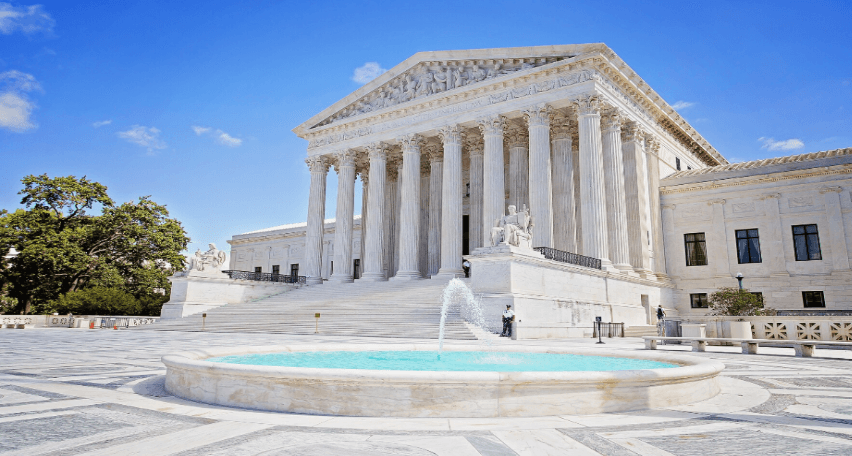
The U.S. Supreme Court has ruled that geofence warrants, which allow law enforcement agencies to obtain location data of mobile devices within a specific area and time period, are subject to the privacy protections of the Fourth Amendment. In a 6-3 decision, the Court held that accessing such location data amounts to a search and therefore requires constitutional safeguards.
The case arose from the investigation of a 2019 bank robbery in Virginia, where police obtained a geofence, warrant directing Google to provide location data for devices that were near the crime scene. The information helped investigators identify Okello Chatrie, who later challenged the use of the warrant, arguing that it collected data from many individuals who were not suspected of any crime.
The Supreme Court held that individuals do not lose their reasonable expectation of privacy simply because their location information is stored by a technology company. However, the Court did not decide whether the warrant used in this case was itself lawful. Instead, it sent the case back to the lower court to determine whether the warrant met the constitutional requirement.
U.S. Court Approves Settlement for 23andMe Data Breach Victims
A U.S. bankruptcy judge has approved a $46.75 million settlement for customers affected by the 2023 data breach at genetic testing company 23andMe. The breach exposed the genetic and personal information of an estimated 6.9 million customers, leading to several lawsuits against the company. The court held that the settlement was fair and in the best interests of the trust managing 23andMe's bankruptcy proceedings. Since $14.29 million had already been distributed in connection with the breach, the latest order approves an additional payment of $32.46 million to eligible victims. The settlement is intended to compensate affected customers for losses arising from the breach and resolve most of the claims linked to the incident. The data breach raised significant concerns because it involved highly sensitive information, including genetic data and personal details collected by the company through its DNA testing services. The decision comes as 23andMe continues to undergo bankruptcy proceedings following its financial difficulties.
Source: Judge approves $46.75 million payout for 23andMe data breach victims | Reuters
Want to stay ahead?
Secure your communications today with a tailored privacy and compliance strategy from Tsaaro.com.