


Tsaaro got CERT-IN Empanelled | MeitY has published the DPDP Rules, 2023.
Tsaaro got CERT-IN Empanelled | MeitY has published the DPDP Rules, 2023.
Tsaaro got CERT-IN Empanelled | MeitY has published the DPDP Rules, 2023.
Tsaaro got CERT-IN Empanelled | MeitY has published the DPDP Rules, 2023.

What Is PDPA?
The PDPA is a Singaporean law that creates a data security framework for organisations’ collection, use, and disclosure of personal data. Organizations are required by law to acquire individuals’ consent before collecting, using, or disclosing their personal data, and to ensure that the personal data is accurate and secure. Individuals have certain rights over their personal data under the PDPA, including the right to view and correct their data, as well as the right to withdraw their consent for the collection, use, or disclosure of their data.
Why Does Your Organization Need to Be PDPA Compliant?
Compliance with the PDPA is required for organisations in Singapore to protect individuals’ personal data and keep their trust. Failure to adhere with PDPA can result in severe penalties and fines, as well as reputational harm to your organisation.
For each violation of the PDPA, fines of up to SGD 1 million or 10% of an organisation’s yearly turnover, whichever is greater, are imposed.
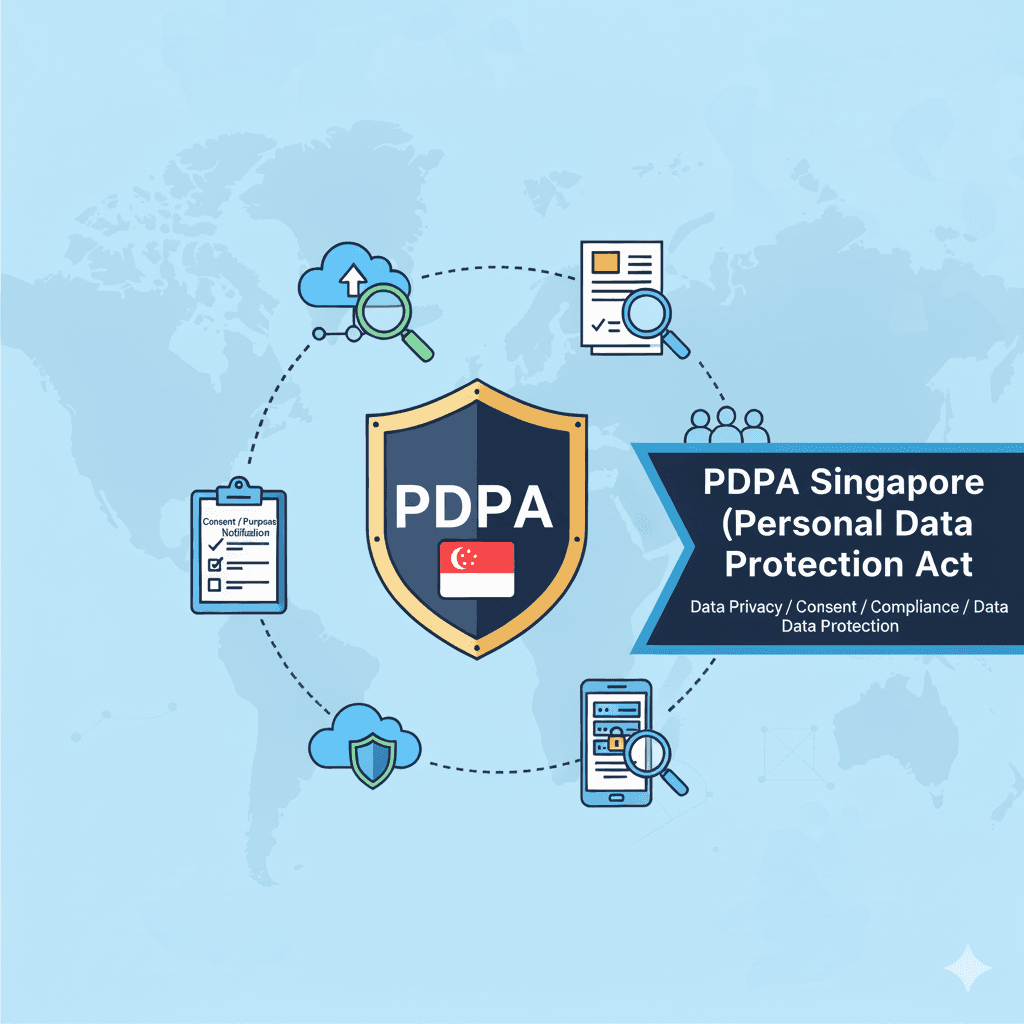

PDPA requires organizations to comply with several regulations, including:
Consent Obligation: This obligation requires organizations to obtain individuals’ consent before collecting, using, or disclosing their personal data.
Data Breach Notification: Organizations must notify the Personal Data Protection Commission (PDPC) of any data breaches within 72 hours of becoming aware of the breach
Data Transfer Requirements: Organizations must ensure that the transfer of personal data outside Singapore is done in accordance with PDPA requirements.
Access and Correction Obligation: This obligation gives individuals the right to access and correct their personal data held by organizations.
Protection Obligation: This obligation requires organizations to implement technical and organizational measures to protect personal data from unauthorized access, disclosure, or theft.
Our Approach
Our approach is founded upon a bedrock of unparalleled expertise and cutting-edge technology. Our team of certified PDPA specialists conducts a comprehensive assessment to identify intricate areas of non-compliance and develop a tailored compliance plan that precisely meets your unique business needs.
Related Services
DPDPA
The Data Protection and Digital Privacy Act (DPDPA) is an emerging law focused on protecting personal data in the digital era. Learn more about the scope and obligations under this regulation.
See you
GDPR (EU)
The General Data Protection Regulation (GDPR) is one of the most stringent data privacy laws worldwide, setting the standard for how organizations collect, process, and store personal data in the European Union.
See you
GDPR (UK)
The UK GDPR is a version of the GDPR that applies specifically to organizations in the United Kingdom, aligning closely with the EU’s version but tailored for the UK’s regulatory framework.
See you
HIPAA
HIPAA (Health Insurance Portability and Accountability Act) is a critical regulation for organizations handling health data in the United States. It ensures the privacy and security of healthcare information.
See you
PDPL Middle East
The Personal Data Protection Law (PDPL) in the Middle East is a region-specific data protection regulation aimed at safeguarding personal data across various Middle Eastern countries.
See you
E-Privacy Directive (EU)
The E-Privacy Directive (EU) regulates how businesses handle electronic communications, ensuring the privacy of users’ digital interactions.
See you